|
|||
| Industry News | <Search <Archives <eBulletin Next> | ||

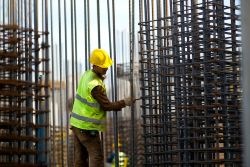
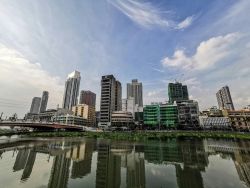
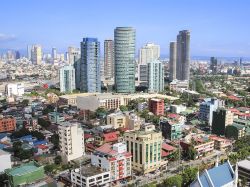
March 1, 2026 Philippine Building & Construction Industry -- Positive Overview  <Main Page <Main Page The Philippine building and construction industry is experiencing sustained expansion, supported by strong economic fundamentals and long-term development priorities. The sector’s total annual construction output is estimated at approximately USD 70–75 billion, reflecting the combined strength of public infrastructure programs and robust private sector activity. This scale positions construction as one of the most important engines of national economic growth. Looking ahead, the industry is projected to grow at an average annual rate of around 6–7% over the next five to ten years, underpinned by continued government commitment to infrastructure modernization and rising private investment. Large, multi-year public projects in transportation, urban development, energy, and flood control provide a stable and predictable pipeline, while private construction remains buoyant across residential, commercial, industrial, and logistics segments. Investment momentum remains strong, supported by a national infrastructure and development pipeline valued at over USD 170 billion, including flagship projects and public-private partnerships. Major developments are distributed nationwide and span transport networks, urban and smart city developments, renewable energy facilities, industrial estates, logistics hubs, and tourism-related infrastructure. This breadth of activity ensures diversified demand across the construction value chain. Favorable macroeconomic conditions further reinforce the sector’s outlook. The Philippine population is expected to grow toward more than 120 million within the next five years, sustaining long-term demand for housing, public facilities, and urban infrastructure. At the same time, the economy is forecast to expand at approximately 5–6% annually, among the strongest growth rates in ASEAN, driven by domestic consumption, investment, and demographic momentum. Together, these factors create a resilient and positive environment for continued expansion of the building and construction industry. Conclusion: Why the Philippines Is Attractive for Foreign Investment Building Materials Production & ASEAN Export Trade The Philippines presents a compelling, long-term investment case for foreign investors in the building and construction value chain, particularly in cement, steel, prefabricated systems, aggregates, glass, aluminum, insulation, and finishing materials. Key positive factors: 1. Large and growing domestic demand Continuous infrastructure and private development create reliable offtake for locally produced building materials. 2. Strategic ASEAN location The Philippines offers strong potential as a manufacturing and export base for ASEAN, benefiting from proximity to fast-growing markets and regional trade integration. 3. Trade integration advantages Participation in ASEAN Free Trade Area (AFTA) and regional trade agreements supports lower tariffs and smoother cross-border trade for construction materials. 4. Cost-competitive production potential Competitive labor demographics, improving industrial zones, and expanding port and logistics infrastructure enhance export competitiveness. 5. Policy support and openness to FDI Continued liberalization, PPP frameworks, and incentives for manufacturing and infrastructure-linked industries encourage foreign participation. With strong construction growth, a deep project pipeline, favorable demographics, and ASEAN export access, the Philippines is well positioned as both a high-growth construction market and a regional hub for building materials production and trade. (Reported by Building.hk) |
|



Copyright © Building.hk All rights reserved.
|