|
|||
| HONG KONG | <Search <Archives <eBulletin Next> | ||

August 16, 2026 Kai Tak Smart & Green Transit System Tender Closes, Marking New Era for Hong Kong TOD Hong Kong has reached a major milestone in the development of its first Smart & Green Mass Transit System (SGMTS), with the tender for the Kai Tak Smart & Green Mass Transit System (SGMTS-KT) closing at noon on 14 August 2026. The system will connect Kai Tak Cruise Terminal with MTR Kai Tak Station, passing key developments including Kai Tak Sky Garden, Shing Fung Road Park and Kai Tak Sports Park.
The project is intended to improve connectivity between the former runway area's residential and commercial developments, tourism, cultural, recreational, sports and community facilities. The Government targets completion and commissioning in 2031.
The works package is considerably broader than the construction of the elevated guideway. It includes passenger vehicles, signalling and control systems, power supply and distribution, communications, fare collection, platform gates and charging facilities, together with civil, geotechnical, drainage, sewerage, utilities, landscaping and E&M works.
BOT Franchise Creates Integrated Infrastructure-Property Model
Under the tender structure, the successful franchisee will be responsible for financing, designing, constructing, testing, operating and maintaining the system.
A 20-year franchise will be granted, including the right to collect fares. At the end of the franchise period, the entire system will be transferred to the Government without payment.
Because the projected operating revenue is not expected to cover the substantial capital investment and asset-renewal requirements, the Government is using a “Rail-plus-Property” / transit-oriented development model.
The successful franchisee will receive property-development rights for three sites — Kai Tak Area 4B Site 5, Area 4C Sites 4 and 5 — at nominal premium as part of the project's financial support mechanism. In return, tenderers are required to propose a fixed payment to the Government for the franchise and property-development rights.
This structure makes the tender particularly important for Hong Kong's property and construction sectors: the winning consortium will effectively have to integrate transport infrastructure, commercial/residential development, station facilities and long-term operations.
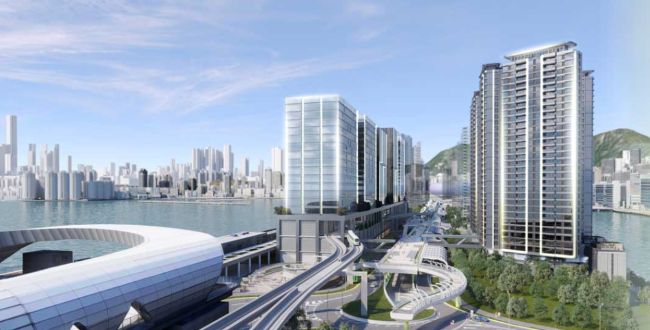 (HKSARG)
Who Are the Potential Bidders?
The Government has not publicly disclosed the identities or final number of tender submissions received as of publication.
However, media reports before tender closing identified at least three prospective consortia.
One reported combination was MTR Corporation and BYD, bringing together Hong Kong's leading railway/property-development operator with a major Chinese new-energy vehicle and transportation technology company.
Another reported contender involved Sun Hung Kai Properties and a Mainland Chinese company, combining substantial Hong Kong property-development capability with Mainland infrastructure/technology resources. A third consortium was also reported to have been preparing a bid. These reports should be treated as market intelligence rather than officially confirmed bidder information.
The final evaluation will be conducted under a two-envelope system, with technical/non-price proposals carrying 60% and price proposals 40%. This gives considerable importance to the proposed transit technology, construction methodology, operating plan and development concept rather than simply the highest financial offer. (Reported by Building.hk)

|
|



|