BUILDING.HK EXCLUSIVE SERIES | PART 3
Growing student demand, supportive government policy and adaptive reuse opportunities are creating a compelling new alternative asset class for investors
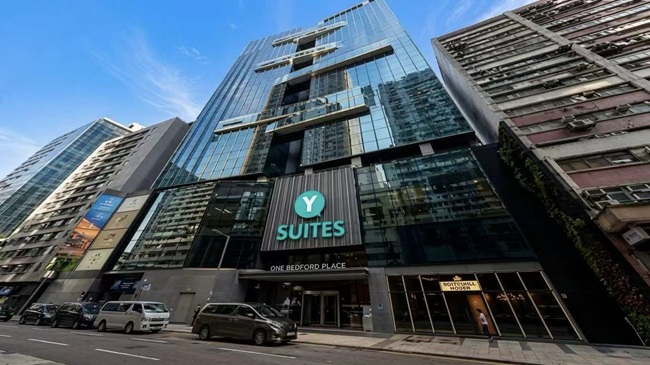
Wee Hur Holdings Limited recently acquired One Bedford Place in Tai Kok Tsui, Kowloon, Hong Kong. The Grade-A commercial property will be repositioned into a 500-bed purpose-built student accommodation, with operations slated to begin in H1 2028, subject to regulatory approvals.
Purpose-Built Student Accommodation (PBSA) has long been regarded as one of the most resilient alternative real estate sectors in mature international markets. Today, as Hong Kong seeks to strengthen its position as an international education hub, the city is witnessing the emergence of what could become an entirely new institutional investment market.
The Government's initiative to facilitate the conversion of hotels into PBSA has generated considerable interest among developers, hotel owners and investors. While the market remains in its infancy, many industry professionals believe the fundamentals are sufficiently strong to support long-term growth.
The challenge now is whether Hong Kong can establish a sustainable operating model that delivers attractive returns for investors while meeting the accommodation needs of a rapidly expanding student population.
A Market Supported by Structural Demand
Unlike traditional residential leasing, demand for student accommodation is driven by long-term demographic and education trends rather than short-term property cycles.
Hong Kong's universities continue to attract students from Mainland China, Asia and increasingly from Europe, North America and the Middle East. Government initiatives to position the city as an international education centre are expected to further increase enrolment over the coming decade.
Yet the supply of purpose-built student accommodation remains extremely limited. Most universities are unable to house all eligible students on campus, forcing thousands to compete in Hong Kong's already constrained private rental market. This imbalance between demand and supply provides the underlying foundation for future PBSA investment.
For investors, this represents demand that is recurring, diversified and comparatively resilient during periods of economic uncertainty.
Why Investors Are Paying Attention
PBSA differs from conventional hotels in several important respects.
Hotels depend heavily on tourism, business travel and seasonal fluctuations. Revenue can change significantly in response to economic conditions, airline capacity or global events.
Student accommodation follows a different cycle.
Academic calendars create relatively predictable leasing periods, occupancy is generally more stable and rental income is spread across longer tenancy agreements. Many international PBSA operators also provide additional services such as study areas, communal facilities, security, internet access and social programmes, creating a comprehensive living environment that appeals to both students and parents.
This operational stability has attracted significant institutional capital overseas.
Pension funds, insurance companies, sovereign wealth funds and specialist real estate investment managers have all increased their allocations to PBSA in recent years because of its defensive characteristics and steady income profile.
Adaptive Reuse Creates New Opportunities
For Hong Kong's hotel owners, the Government's conversion policy offers an opportunity to reposition ageing assets without undertaking complete redevelopment.
Many older hotels already possess features suitable for student accommodation, including compact room layouts, en-suite bathrooms, communal areas and convenient urban locations.
Adaptive reuse also aligns with broader environmental, social and governance (ESG) objectives by extending building life cycles, reducing demolition waste and lowering embodied carbon compared with complete reconstruction.
From an investment perspective, converting an existing hotel may shorten development programmes and reduce project risks, provided that building regulations, fire safety requirements and planning approvals can be successfully addressed.
Comparing Investment Characteristics
While investment performance varies between projects, PBSA possesses several characteristics that distinguish it from other property sectors.
| Asset Class |
Primary Demand Driver |
Income Stability |
Typical Investment Profile |
| Office |
Business expansion |
Moderate |
Sensitive to economic cycles |
| Retail |
Consumer spending |
Moderate |
Influenced by retail trends |
| Hotel |
Tourism and business travel |
Volatile |
Strongly linked to visitor arrivals |
| Residential Rental |
Local housing demand |
Stable |
Mature investment market |
| PBSA |
Student enrolment |
Stable |
Emerging institutional asset with long-term growth potential |
Rather than competing directly with hotels or residential leasing, PBSA occupies a distinct position within the alternative real estate market.
Challenges Should Not Be Underestimated
Despite its potential, PBSA is not without risk. Successful developments require more than simply converting hotel rooms.
Professional management is essential to provide security, maintenance, student welfare services, communal programming and operational efficiency. Investors must also understand the seasonal nature of student leasing, university admission cycles and tenant expectations.
Regulatory compliance represents another important consideration. Building design, fire safety, accessibility, lease conditions and planning approvals all require careful evaluation before conversion projects can proceed.
In addition, Hong Kong's relatively high land and construction costs mean investors must adopt disciplined financial planning to achieve sustainable returns.
Lessons from Overseas Markets
Cities such as London, Melbourne and Sydney demonstrate how PBSA can evolve into a mature institutional asset class supported by specialised operators and long-term investment capital.
These markets have shown that professionally managed student accommodation not only provides stable financial performance but also enhances the overall attractiveness of universities by improving students' living experience.
Hong Kong possesses many comparable strengths, including internationally recognised universities, excellent public transport, a safe urban environment and a strategic location within Asia.
As the city expands its international student population, demand for professionally managed accommodation is likely to become increasingly important.
Looking Five Years Ahead
Industry observers expect the next phase of market development to be shaped by three key factors.
First, the success of the initial hotel conversion projects will establish benchmarks for future investment decisions.
Second, continued Government support and efficient planning procedures will influence how quickly additional projects enter the market.
Third, universities, private operators and investors will need to collaborate to create a sustainable operating model that balances affordability, quality and commercial viability.
If these conditions are achieved, PBSA could gradually emerge as one of Hong Kong's most promising alternative property sectors.
Conclusion
Hong Kong's PBSA market remains in its formative years, but the underlying fundamentals are encouraging.
Growing international student enrolment, supportive public policy and an increasing willingness among hotel owners to consider adaptive reuse have combined to create momentum that was largely absent only a few years ago.
The road ahead will undoubtedly present regulatory, operational and financial challenges. Nevertheless, the direction of travel appears increasingly clear.
For developers, investors, architects and property professionals, Purpose-Built Student Accommodation is no longer simply a niche concept. It is an emerging sector that has the potential to reshape both Hong Kong's education infrastructure and its alternative real estate market.
Whether PBSA ultimately becomes Hong Kong's next major investment hotspot will depend on the quality of the first projects delivered. But if international experience is any guide, the foundations are already being laid for a new chapter in the city's property sector.
(Reported by Building.hk)