November 13, 2011
Launching of Hong Kong's first Light Lab
Apart from being an essential element of architecture and interior design, lighting, when designed and applied aptly, can improve the functionality and atmosphere of a building and its visual effect, as well as create a pleasant and relaxed mood. To promote the knowledge and development of lighting design in Hong Kong, the celebrated lighting design company and consultant – LEDARTIST – has set up the very first professional lighting laboratory in Hong Kong, the Light Lab. The Light Lab was officially launched in October. Mr Teddy Lo, Chief Vision Officer of LEDARTIST, Mr Ken Lee, Lighting Designer of LEDARTIST and Dr Chung Tse Ming, Associate Professor (Department of Building Services Engineering) of The Hong Kong Polytechnic University, introduced to the media the Light Lab's facilitates and explained how lighting design can help reduce light pollution.
Lighting designers from LEDARTIST set up various simulated scenarios in the 1,000 square feet lab, luminaires and lamp sources partially sponsored by Cree, ERCO, Martin, Maxgrand, NVC, Optiled and Osram, to demonstrate how a pleasurable environment can be achieved by different installations and techniques:
1. Office and cafe: showed how light sources affect the atmosphere by applying light of different colour temperature;
2. Museum: demonstrated the effect of lighting from different angles and distances on exhibits;
3. Plant decoration, park and building exterior: showed distinctive effects made by different lamp sources on colour rendering index, various arrangement of lighting fixtures affecting uniformity and the measures of glare control. They also, showed ways to increase energy efficiency by using suitable lamp sources.
Popularization of lighting design has to a degree helped to lessen light pollution in Hong Kong, which is mainly caused by low efficiency luminaires and lamp sources from advertising billboards, offices, outdoor sports grounds, factories, street lamps and even low efficiency domestic lights. It does not only waste energy and damage wildlife, it is also detrimental to the citizens' health.
Past studies have shown that the light intensity of Hong Kong's urban area is 30 times higher than that of the less-populated countryside and The Environmental Protection Department receives around 40 complaints each year about light pollution.
To demonstrate how lighting design is able to reduce light pollution as well as energy consumption, LEDARTIST quoted the Tin Shui Wai Park as an example of how improvements could be made to its entrance, footpath and central plaza. In July 2011, residents complained about the park's poor lighting, which was disturbing and might even lead to accidents. The recommendations are as follow:
1. For the entrance, use lower power and lower lumen wall luminaires with glare control cover to reduce contrast and direct glare; add step lights for safety and security.
2. For the footpath, replace the pole light with low power fluorescent lamps bollards and step lights evenly to provide adequate illuminance and enhance uniformity.
3. For the central plaza, use indirect pole light with specific light distribution and step lights to give effectively controlled light.
|
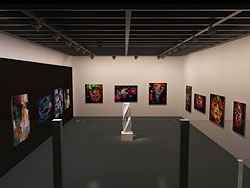
Gallery Scene |
|
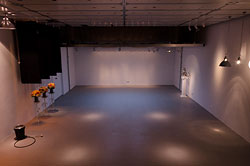
Light Lab Overview |
|
|