 < Main Page
Massive Housing Demand, Trillion-Peso Investment Pipeline, and Strategic Entry Opportunities for Foreign Producers in ASEAN
Macro context: rapid urbanization + structural housing deficit
Urbanization is already high and rising: ~85% urban population with expanding built-up areas and secondary cities
Housing backlog:
~8.25 million units (2025) → ~11.2 million by 2030 if unmet
Longer-term risk: up to 22 million units by 2040
This is one of the largest structural housing gaps in ASEAN—driving long-term construction demand.
Government housing & urban development plan (2023–2030 horizon)
Philippine Development Plan (PDP) 2023–2028
The government’s core blueprint prioritizes:
- Affordable housing expansion
- New town / township development
- Infrastructure-led urban expansion
- PPP-driven housing delivery
Marcos administration housing target
~1 million housing units per year target
Equivalent to ~6 million units (2023–2028)
However, actual delivery has been <100,000 units/year recently → huge execution gap
Flagship program scale
Plan cited: ~3.2 million housing units by 2028
Financing concept: ~₱4 trillion (~USD 70–75B) funding pool (loans + guarantees)
This suggests a massive ramp-up phase (2025–2030) if execution improves.
Financial scale (5–10 year outlook)
Required capital (structural need)
Estimated:
₱8.9 trillion (~USD 150B) needed to eliminate backlog by 2030
Average unit cost:
~₱800,000 (~USD 13,600) per socialized housing unit
Government annual budgets (indicative)
Total national budget 2025: ₱6.3 trillion
Housing-specific budget remains very small (~₱5–6B level)
Conclusion:
The sector is not government-funded alone → must rely on:
- PPPs
- Private developers
- Pag-IBIG financing (mortgage system)
- Capital markets / foreign investment
Urban development pattern (important for investors)
Shift toward “new towns” and regional growth
Government policy promotes:
- Planned communities outside Metro Manila
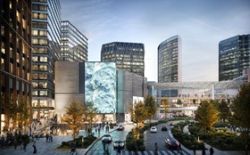
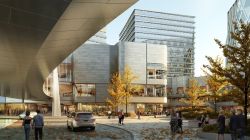
- Integrated townships (housing + industry + logistics)
- Transit-oriented development (Build Better More program)
Infrastructure push
₱1.5 trillion infrastructure budget (2025)
Focus:
Transport corridors
Airports, ports
Digital infrastructure
Housing demand will cluster along infrastructure corridors.
Opportunities for foreign producers / manufacturers
Construction materials (HIGH opportunity)
Mass housing scale → strong demand for:
- Cement, steel, prefabricated components
- Modular housing systems
- Low-cost finishing materials
Why attractive:
- Volume-driven market (millions of units)
- Local supply gaps in advanced materials
Industrialized / modular construction
Government needs:
- Faster build rates (currently far below target)
- Cost reduction
Opportunities:
- Precast concrete plants
- Modular housing factories
- Lightweight building systems
This is one of the clearest entry points for foreign firms
Urban infrastructure supply chains
Linked to housing + infrastructure:
- Water systems
- Waste management
- Power distribution
- Smart city tech
Home components & appliances (mid-income growth)
Urbanization → rising demand for:
- HVAC, appliances
- Kitchens, bathrooms
- Electrical systems
(Reported by Building.hk)