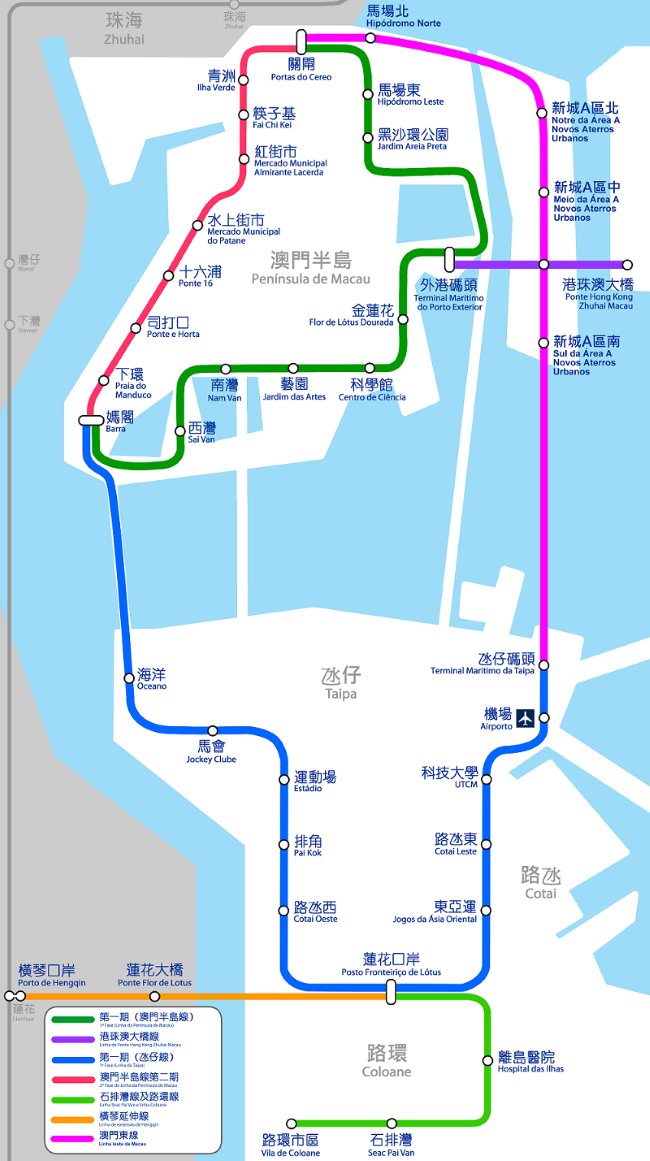
The Macao SAR Government has launched the Light Rail Transit (LRT) Development Strategy Study to formulate a long-term, integrated framework for the future expansion of Macao’s rail-based public transport system. The study reflects the Government’s strategic response to increasing mobility demand, limited urban space, and the need for a sustainable, low-carbon transport backbone.
Rather than focusing on individual projects, the Strategy Study adopts a system-wide planning approach, defining the future role, scale, and structure of the LRT network. It evaluates anticipated passenger demand from both residents and visitors, establishes guiding principles for route alignment and network development, and considers construction methods and system technologies appropriate for Macao’s dense urban environment.
At a strategic level, the study outlines a progressively expandable LRT network aimed at improving connectivity across the Macao Peninsula, Taipa and Cotai, while strengthening access to major residential areas, tourism zones and border-crossing facilities. Emphasis is placed on enhancing cross-district mobility and reducing reliance on road-based transport.
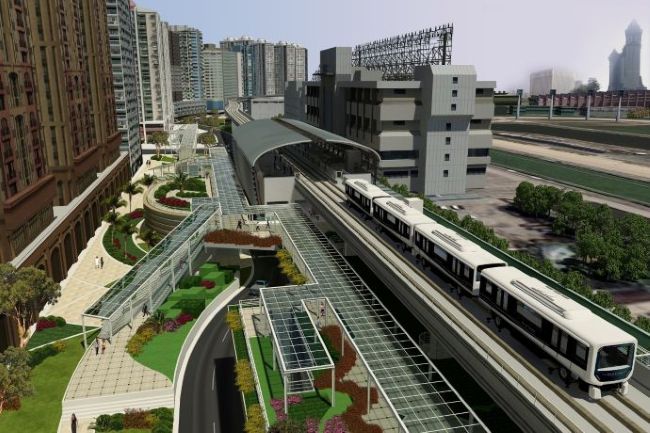
(Macao LRT)
To minimize urban and environmental impact, the strategy highlights a preference for underground or partially underground alignments in densely built or sensitive areas, including heritage zones. This approach seeks to balance transport capacity enhancement with preservation of the urban landscape and continuity of daily city operations.
Public and professional engagement forms a core component of the study. A structured consultation process has been implemented to gather feedback from industry stakeholders and the general public, ensuring that the final strategy reflects technical feasibility, community needs and social consensus.
Overall, the LRT Development Strategy Study serves as a policy roadmap for Macao’s future rail transit development, supporting broader objectives such as sustainable urban growth, improved public transport efficiency, reduced carbon emissions, and deeper integration within the Greater Bay Area transport framework. It marks a transition from fragmented implementation toward coherent, long-term mobility planning for the city. (Reported by Building.hk)